On our 2025 Sustainability page we committed to becoming
a carbon-neutral business by 2025. Seven years later, in September 2026,
AgriData Ltd marked thirty years in operation. One week after that, the
Sustainable Energy Authority of Ireland shortlisted us as finalists in
their Energy Awards.
The idea of self-generated power on this land, though, is older than
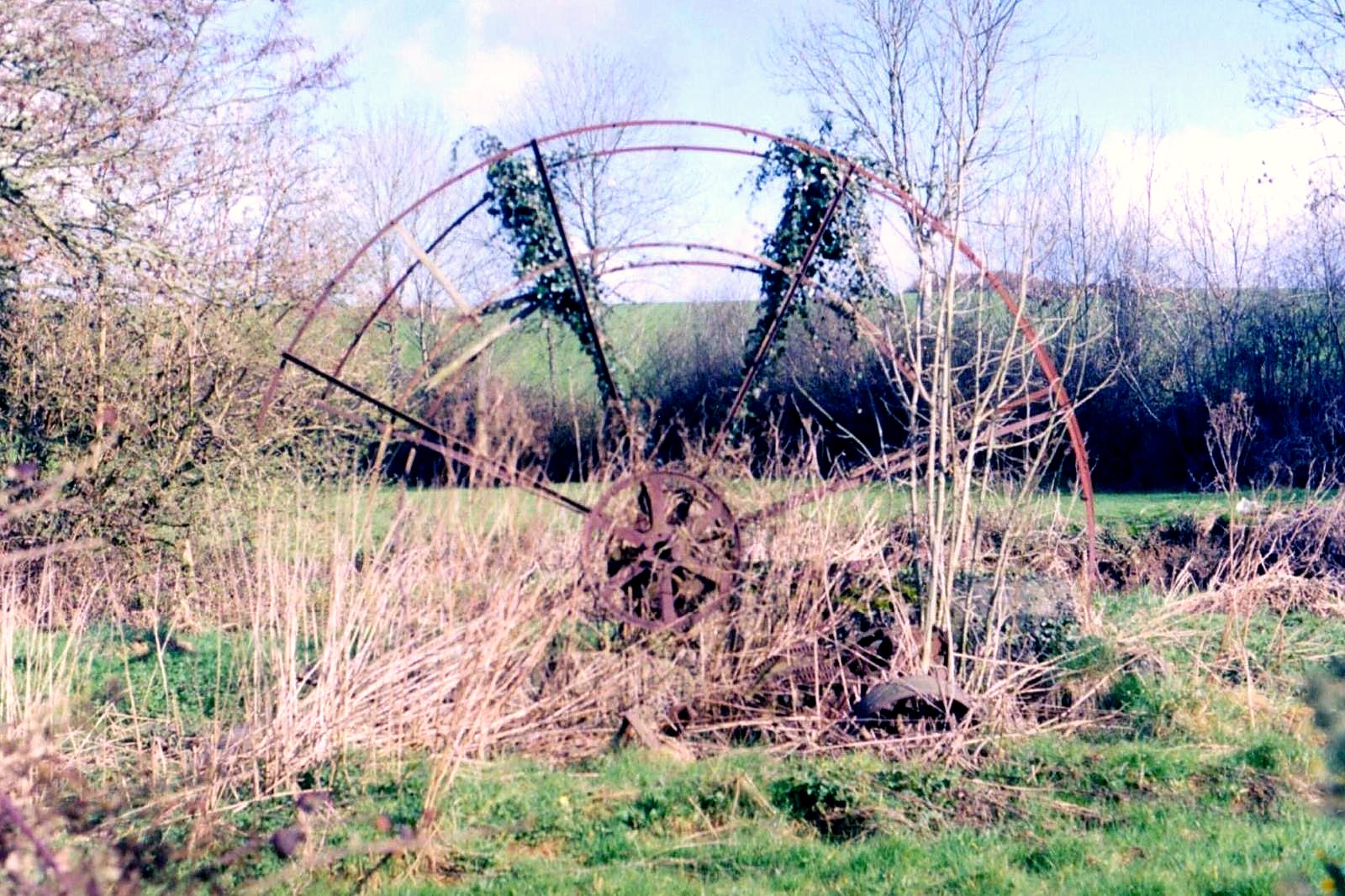
AgriData itself — our father built a waterwheel here in the 1930s
that gave the family house its first electric light. The 2018 commitment
was a return to a principle, not a new one.
This page documents the journey — what we did, what it cost, what
worked, and what did not. The Gala Ceremony is on 4 November 2026 at the
InterContinental Dublin.
Verified against primary business records: six Electric Ireland invoices for 2018 electricity, sixty-one diesel invoices from our accounting system, and the Huawei FusionSolar monitoring system attached to the business meter.
Phased investments, decided one at a time. Each informed the next.
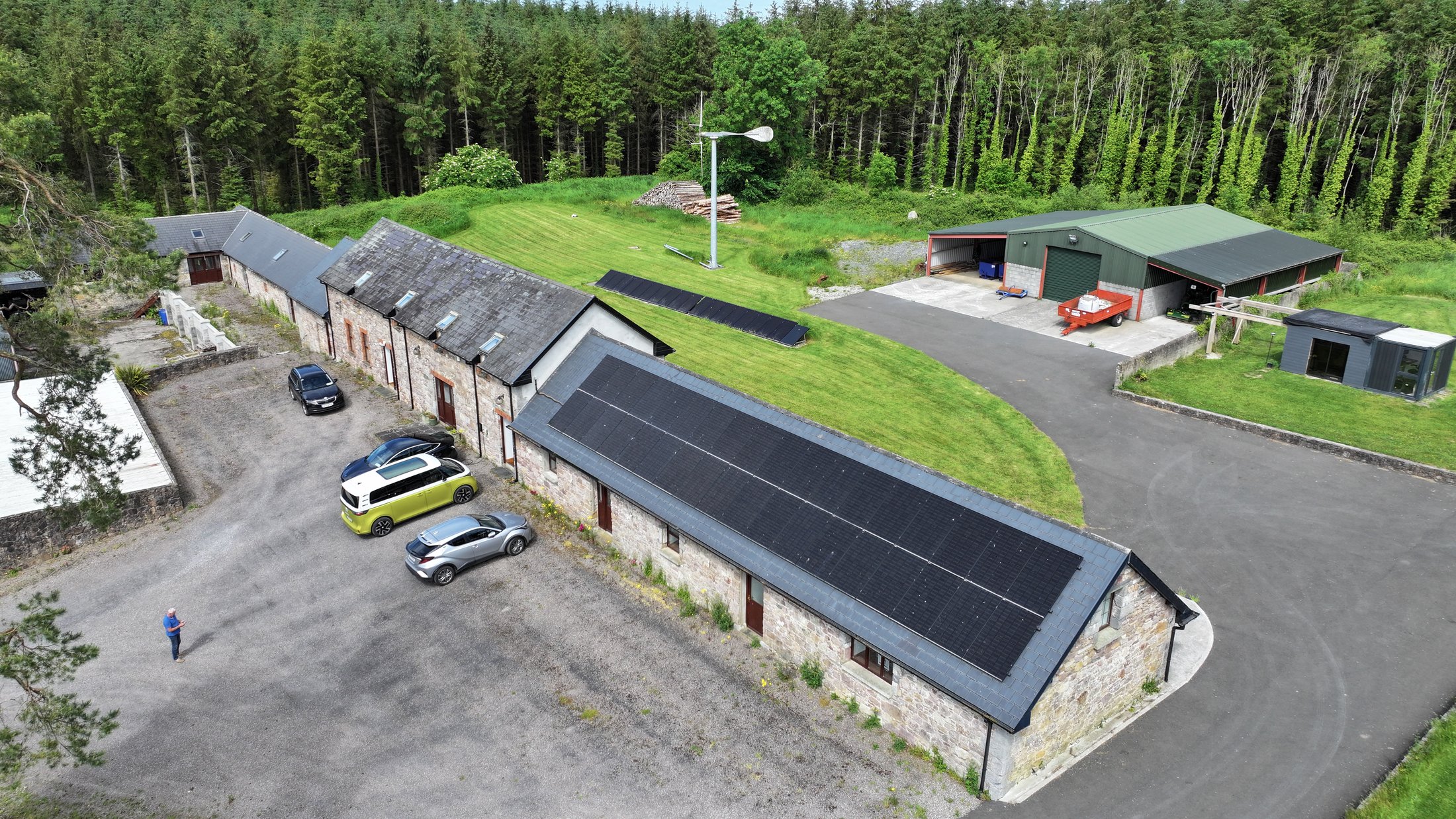
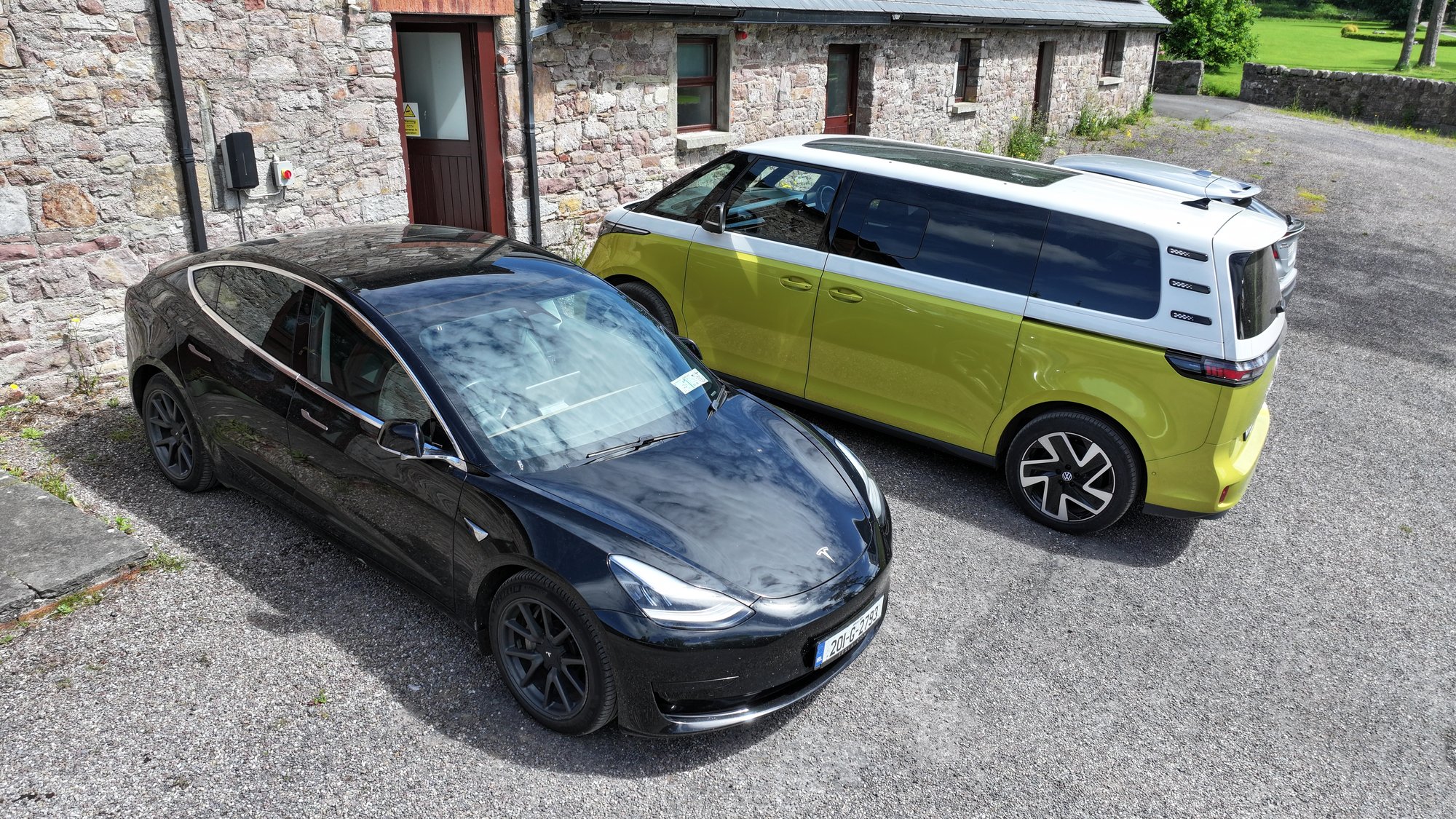
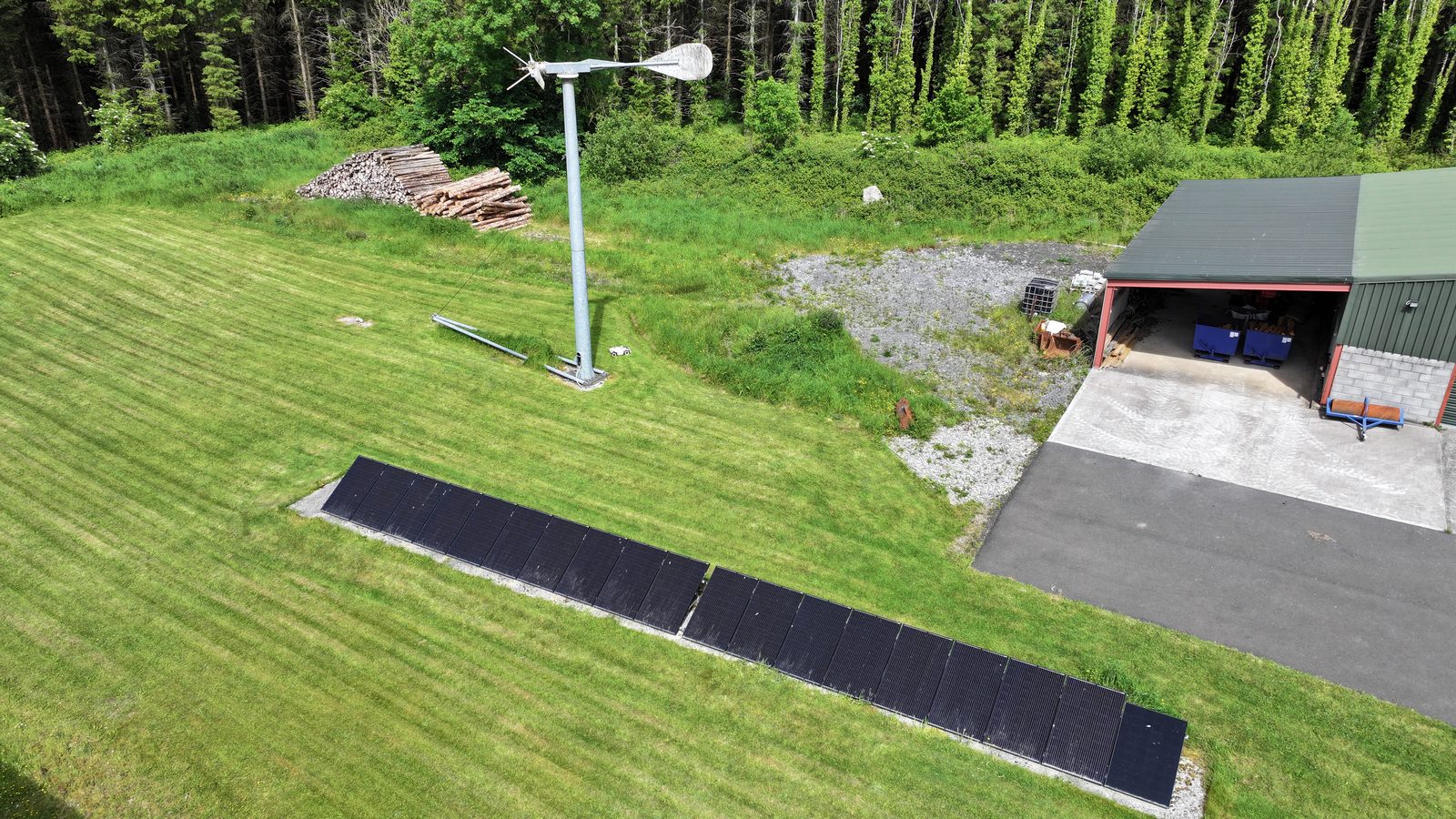
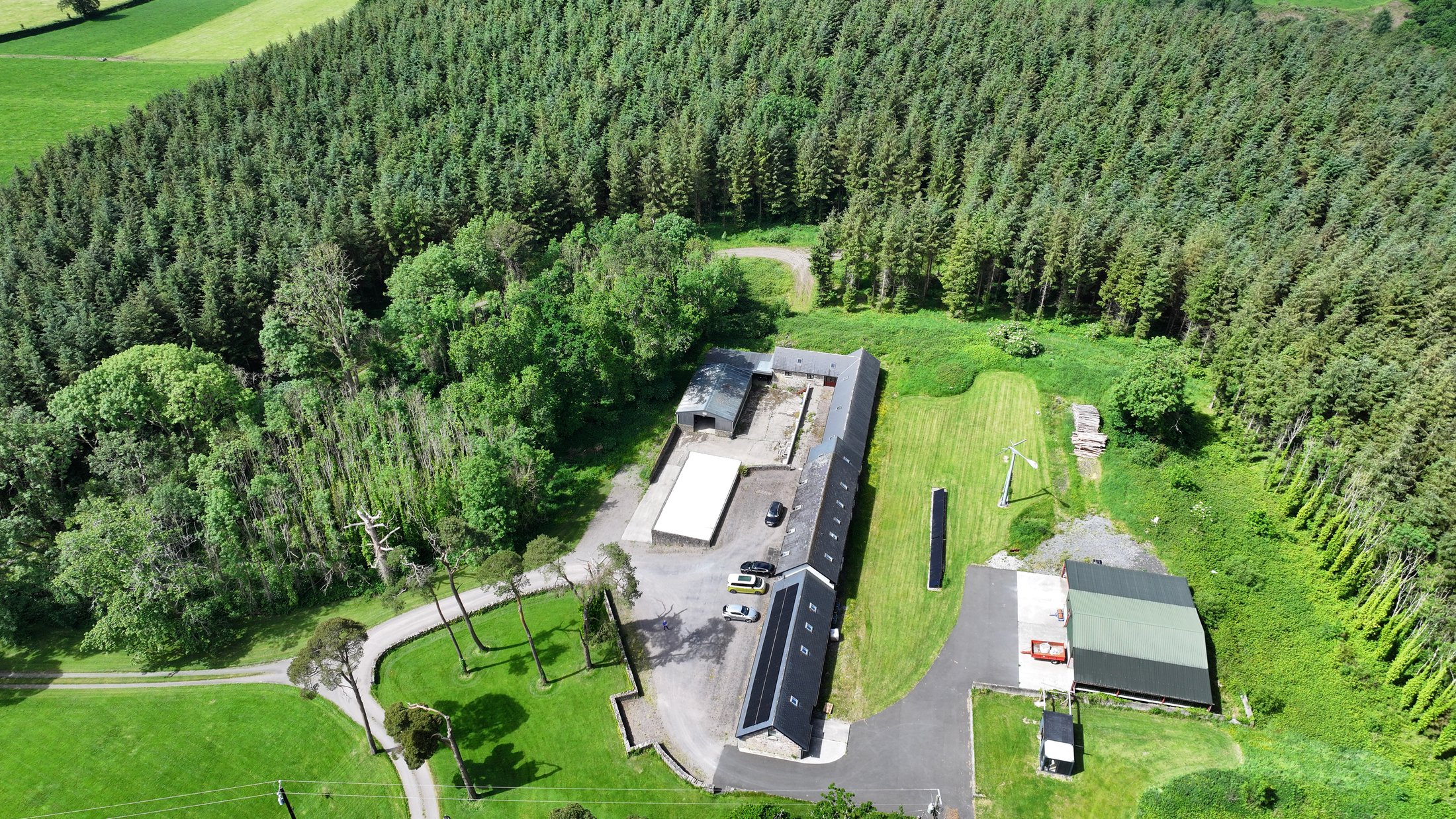
The site at Cluen, Bansha, Co. Tipperary — drone photographs, May 2026.
The 6 kW turbine we installed in 2020 was a bad decision in its own terms. The mature tree cover surrounding our site reduces wind to a level that no small turbine can productively work with. Output has been consistently disappointing.
We mention it in every forum we talk about this — including the SEAI application — because the lesson is more useful to other small businesses than a glossy success story. Before you commit capital to renewable generation, be ruthlessly honest about site conditions. We weren't, and we have a six-year-old reminder standing beside the solar arrays to prove it.
If you're a small business thinking about your own transition, or an organisation documenting what works and what doesn't, we are genuinely open to hosting visits and sharing what we learned.
Walk the site, see the installations, ask the awkward questions.
Email David Mullins →Three-page PDF: comparison chart, timeline, investment breakdown.
Download PDF ↓